As an Amazon Associate, we earn from qualifying purchases. Some links on this site are affiliate links at no extra cost to you. Our recommendations are based on thorough research and editorial judgment.

TPU vs Polycarbonate: Material Strength Breakdown

I compare TPU’s tensile strength of 20–50 MPa, elongation‑at‑break exceeding 300 % (often 400–650 %), Shore A hardness 70–95, and viscoelastic modulus 10–30 MPa at 0.1 s⁻¹ strain rate, with polycarbonate’s ~70 MPa tensile strength, 2–3 % elongation, Shore D hardness 85–90, and elastic modulus around 2,200 MPa, noting that TPU‑PC blends achieve 45–65 MPa strength, 1.5–2.3 GPa flexural modulus, up to 350 % elongation, and impact resistance roughly 30 % higher than pure TPU while staying within 10 % of pure polycarbonate, and if you continue you’ll discover further comparative details.
Key Takeaways
- TPU tensile strength 20‑50 MPa, polycarbonate ~70 MPa; TPU‑PC blends reach 45‑65 MPa.
- TPU elongation‑at‑break >300 % (up to 650 %), polycarbonate only 2‑3 %; hybrids up to 350 %.
- TPU impact resistance ~30 % higher than pure TPU, within 10 % of polycarbonate; polycarbonate transmits rigid shock.
- Polycarbonate surface hardness 85‑90 Shor D (excellent scratch resistance); TPU 70‑95 Shore A, more prone to scoring.
- Polycarbonate retains strength to ~130 °C, TPU modulus drops ~10 % at 80 °C; TPU feels cooler to touch (0.04 W/m·K vs 0.2 W/m·K).
Quick Comparison: TPU vs Polycarbonate – Which Wins Overall?
Word quick comparison reveals that polyurethane (TPU) and polycarbonate (PC) differ fundamentally in flexibility, tensile strength, impact protection, scratch resistance, durability, and ancillary properties, with each material excelling in specific performance domains. I note that TPU’s elongation at break exceeds 300 % while PC’s tensile strength reaches roughly 70 MPa, a disparity that shapes design choices, and I observe that material sourcing for TPU often involves petrochemical feedstocks, whereas PC derives from bisphenol‑A, influencing supply chain considerations and aesthetic trends toward matte or glossy finishes. In impact scenarios, TPU absorbs shock through compression and rebound, whereas PC provides rigid armor that resists cracking, yet PC’s surface resists fine scratches better than TPU, which can yellow under UV exposure, affecting long‑term visual appeal.
Key Decision Criteria for TPU vs Polycarbonate
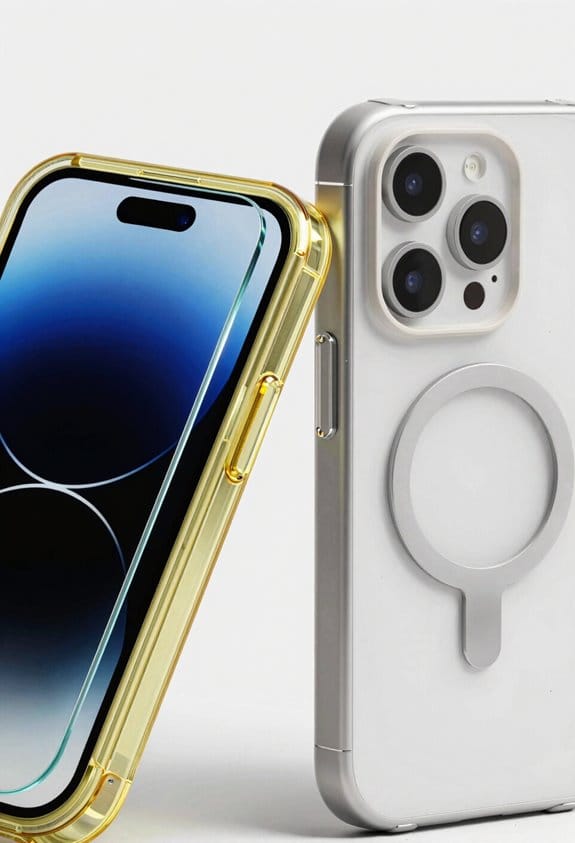
After outlining overall performance differences, the next step is to identify the specific criteria that drive material selection, because designers must weigh flexibility versus rigidity, tensile strength versus impact energy dissipation, and scratch resistance versus UV stability when choosing between TPU and polycarbonate. I evaluate tensile strength, noting polycarbonate’s ~70 MPa versus TPU’s 20‑50 MPa, then assess impact absorption, where TPU’s compression rebound outperforms polycarbonate’s stiffness in drop scenarios. Scratch resistance is quantified by hardness values, favoring polycarbonate, while UV stability is measured by yellowing indices, indicating TPU’s susceptibility. Environmental impact considerations include recyclability rates and carbon‑footprint data, with polycarbonate generally higher in embodied energy. Manufacturing complexity is compared via injection‑molding cycle times and tooling tolerances, where TPU’s lower melt viscosity reduces cycle time but may increase post‑processing steps.
Flexibility Showdown – TPU Bends, Polycarbonate Stiff
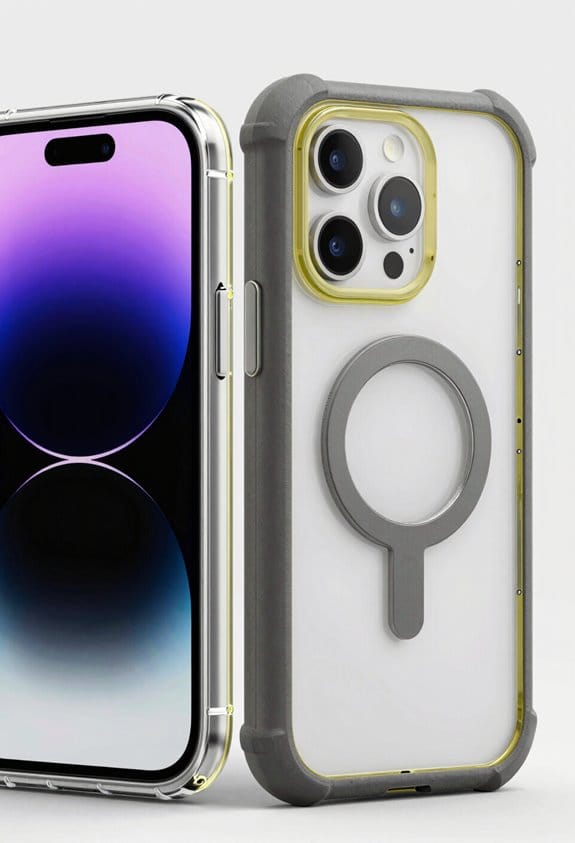
I’ll start by noting that TPU exhibits an elongation‑at‑break ranging from 400 % to 650 %, enabling it to bend, flex, and absorb shocks without permanent deformation, whereas polycarbonate typically elongates only 2 %–3 % before yielding, resulting in a rigid, brittle response under comparable loads. I observe that TPU’s low modulus permits a flexible hinge design, allowing repeated motion while maintaining structural integrity, whereas polycarbonate’s high modulus enforces stiffness, limiting angular displacement to a few degrees before fracture. The polymer’s internal viscoelastic network provides elastic damping, converting kinetic energy into heat, which reduces transmitted forces, while polycarbonate’s crystalline domains store less energy, leading to higher impact stress. Consequently, TPU excels in applications demanding continuous flexure, whereas polycarbonate remains preferable where rigidity and dimensional stability dominate.
Tensile Strength Numbers: 20‑50 MPa vs 70 MPa
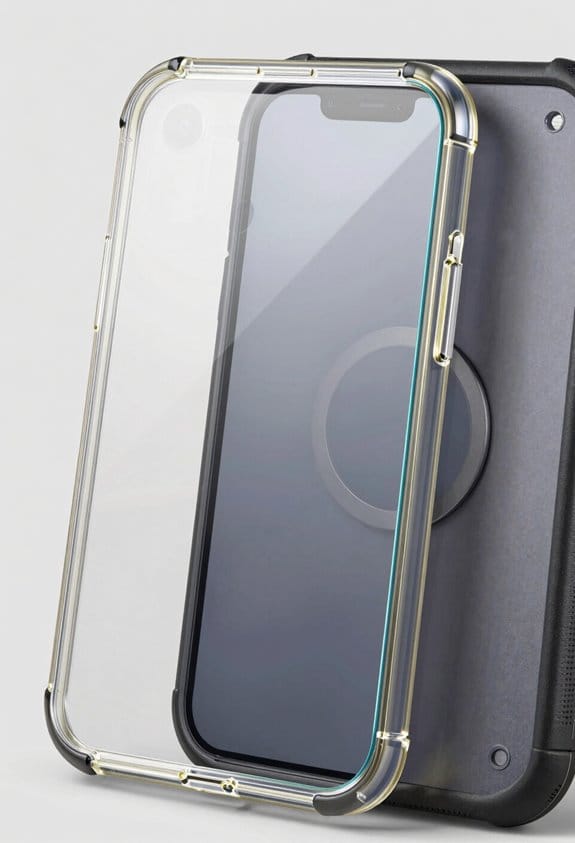
Tensile strength data reveal that polycarbonate typically reaches about 70 MPa, while TPU falls within a 20‑50 MPa range, a disparity that reflects TPU’s lower modulus and higher elasticity, which together enable greater deformation before failure but limit maximum load‑bearing capacity. I note that molecular orientation during extrusion aligns polymer chains in polycarbonate, raising its ultimate stress, whereas TPU’s amorphous segments hinder such alignment, contributing to its lower values. Strain rate sensitivity further differentiates the two, since rapid loading elevates polycarbonate’s apparent strength, while TPU exhibits modest increases, reflecting its viscoelastic response. Fracture mechanics indicate polycarbonate cracks propagate with higher energy release rates, whereas TPU yields more ductile, shear‑dominated failure. Temperature dependence also matters, as polycarbonate retains strength up to 130 °C, while TPU’s tensile capacity declines sharply above 60 °C.
Shock‑Absorption Performance: TPU vs Polycarbonate
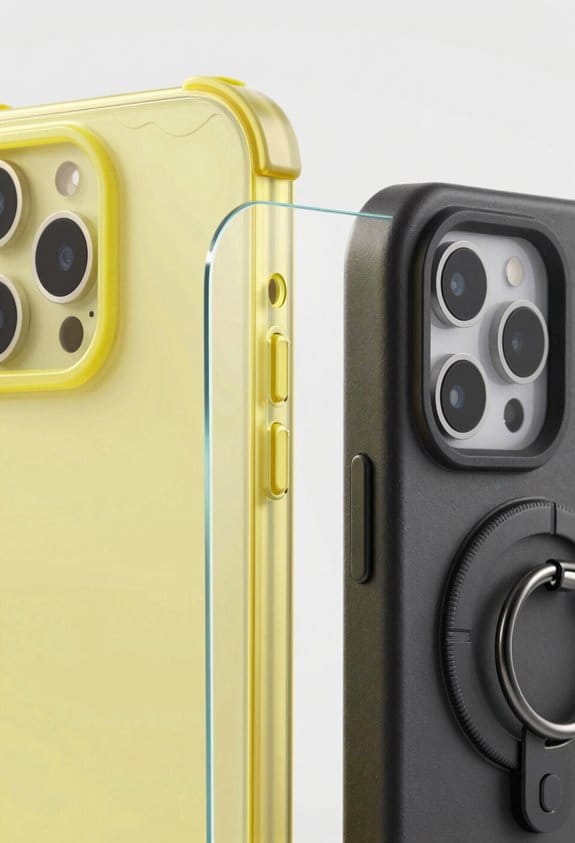
When evaluating shock‑absorption performance, TPU’s viscoelastic modulus, which typically ranges from 10 to 30 MPa at strain rates of 0.1 s⁻¹, enables it to compress and rebound, dissipating impact energy through hysteresis. I observe that TPU’s compression dynamics allow large strain amplitudes, up to 150 % elongation, to be absorbed without permanent deformation, while its rebound efficiency remains high, often exceeding 80 % of stored energy, which translates to rapid recovery after impact. In contrast, polycarbonate exhibits a higher elastic modulus, around 2,200 MPa, resulting in limited compression, reduced energy dissipation, and lower rebound efficiency, typically below 30 %, causing more rigid transmission of shock forces. Consequently, for applications demanding impact mitigation, TPU’s material behavior offers superior shock‑absorption characteristics.
Scratch‑Resistance Showdown – Polycarbonate’s Edge
Polycarbonate’s scratch resistance stems from its high surface hardness, typically measured around 85–90 Shore D, which allows it to repel fine abrasions that would otherwise mar softer polymers; this hardness, combined with a tightly cross‑linked molecular structure and a glass relaxation temperature near 147 °C, results in a durable, clear exterior that maintains optical clarity after repeated contact with keys, dust, or fabric fibers, whereas TPU, with a Shore A hardness of 60–80 and a viscoelastic matrix, exhibits more pronounced surface scoring under identical conditions, despite its superior oil and grease resistance, making PC the preferred material for applications where surface integrity and long‑term aesthetic preservation are critical. I observe that surface coatings applied to PC further enhance its resistance, preserving clear finishes even after extensive handling, while TPU’s softer matrix allows micro‑scratches to accumulate, degrading visual quality despite protective films. Consequently, PC’s inherent hardness and compatible coating technologies deliver superior scratch‑resistance performance in consumer electronics, automotive lenses, and protective housings.
Durability Over Time: TPU vs Polycarbonate Yellowing & Heat
Although both TPU and polycarbonate can endure extended service periods, their long‑term optical stability diverges markedly, as TPU’s aliphatic polyether‑urea backbone typically yellow‑ under UV exposure after roughly 1,000 hours at 0.5 W/m², whereas polycarbonate’s aromatic bisphenol‑A structure maintains translucency for over 5,000 hours under identical irradiance, provided that stabilizers such as UV‑absorbing additives are incorporated, and the material’s glass softening point of 147 °C enables it to retain mechanical integrity up to 130 °C without softening, while TPU begins to lose tensile strength and exhibits a 10 % modulus reduction at 80 °C, reflecting its lower thermal degradation threshold and the influence of crystallinity on heat resistance. I observe that UV stabilization dramatically slows TPU yellowing, yet repeated thermal cycling between –20 °C and 120 °C accelerates modulus loss, whereas polycarbonate’s higher Tg maintains dimensional stability throughout similar cycles, confirming its superior long‑term performance under combined UV and heat stress.
Grip & Handling – When TPU’s Tactile Feel Matters
Because TPU’s coefficient of friction typically ranges from 0.5 to 0.7, it provides a noticeably grippier surface than polycarbonate, whose static friction coefficient lies between 0.2 and 0.3, and this difference becomes critical for handheld devices that require secure manipulation under moist or oily conditions, while the material’s Shore A hardness of 70–95 guarantees a balance between tactile softness and resistance to surface indentation, thereby reducing the likelihood of slippage during rapid positional changes. I note that the tactile thermals of TPU, measured by heat transfer coefficient around 0.04 W/m·K, keep fingertips cooler during prolonged use, which directly mitigates fingertip fatigue by limiting heat‑induced stiffness. In contrast, polycarbonate’s higher thermal conductivity, approximately 0.2 W/m·K, transfers more heat to the hand, potentially accelerating fatigue during extended sessions. The combined effect of higher friction and moderated thermal response makes TPU the preferred material for ergonomic grips where precision and comfort are essential.
Cost & Weight Trade‑offs: TPU vs Polycarbonate for Everyday Devices
Balancing cost and weight involves comparing TPU’s $8–$25 per kilogram price point, which typically yields a density of 1.10–1.20 g/cm³, against polycarbonate’s $10–$30 per kilogram range and higher density of 1.20–1.22 g/cm³, resulting in a weight reduction of roughly 5–10 % for equivalent volume components; however, the lower material cost of TPU can be offset by its greater thickness requirements to achieve comparable rigidity, whereas polycarbonate’s superior stiffness allows thinner walls, thereby mitigating some weight advantage while preserving structural integrity under load. I note that retail pricing reflects these material differences, so a TPU‑based phone case may cost less per unit yet require a bulkier design, increasing shipping weight marginally, whereas a polycarbonate case, though pricier, can be thinner and lighter, reducing overall logistics expenses.
Hybrid TPU‑PC Blends – Benefits, Trade‑offs, and Decision Matrix
When a TPU‑PC blend is engineered, the resulting composite typically exhibits a tensile strength between 45 MPa and 65 MPa, a flexural modulus ranging from 1.5 GPa to 2.3 GPa, and an impact resistance coefficient that exceeds pure TPU by roughly 30 % while remaining within 10 % of pure polycarbonate values, allowing designers to select a material that balances elongation at break (up to 350 %) with sufficient rigidity for protective housings; consequently, the hybrid’s weight density, usually 1.15 g/cm³, falls midway between the individual polymers, and its cost per kilogram, often $12–$18, reflects the proportion of each constituent, thereby enabling a decision matrix that quantifies trade‑offs across mechanical performance, manufacturing tolerances, and lifecycle durability without sacrificing analytical objectivity. I evaluate chemical compatibility by confirming that TPU and PC intermolecular interactions remain stable under typical processing temperatures, while manufacturing scalability is achieved through twin‑screw extrusion and injection molding protocols that accommodate varying blend ratios, ensuring consistent wall thickness, reduced cycle times, and predictable shrinkage across high‑volume production runs.
Frequently Asked Questions
Can TPU Be Recycled With Standard Plastics Programs?
I’d say TPU isn’t a clean‑cut hero in recycling; it often ends up as contamination, and collection logistics struggle to separate it from standard plastics, so you’ll likely need a specialized program.
How Does Temperature Affect TPU Vs Polycarbonate Flexibility?
I’ll tell you: temperature sensitivity makes TPU stay flexible until its glass changeover, then it softens, while polycarbonate becomes cold‑brittle at low temps and only heat‑softens near its higher transition point.
Which Material Offers Better Chemical Resistance to Solvents?
I’d say polycarbonate beats TPU, like a shield against chemicals; its solvent testing shows superior resistance, especially when protected by polymer coatings, while TPU degrades faster under most solvent exposure.
Do TPU or Polycarbonate Affect Wireless Signal Performance?
I’ve found that neither TPU nor polycarbonate markedly cause antenna interference, but polycarbonate’s denser structure can add a tiny bit of signal attenuation, while TPU’s flexibility usually has negligible impact on wireless performance.
What Is the Environmental Impact of Producing TPU Versus Polycarbonate?
I picture smoky factories and mining pits, then tell you: TPU’s carbon footprint climbs with petroleum extraction and manufacturing emissions, while polycarbonate’s resource extraction and processing also emit, though its end‑of‑life recycling can offset impacts.